
'The year in pictures' treks across the globe, looking back on the moments that shaped 2016. From the United States presidential race, to demonetisation in India to the refugee crisis, the news has kept pouring in. Here are our top 50 moments from the world.

'The diplomat's arrest has led to a major diplomatic spat, the likes of which I have not seen in my nearly three decades of covering the US-India relationship, says Aziz Haniffa. 'The knee-jerk reaction by the powers-that-be in Delhi was myopic to say the least.'
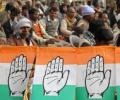
Faced with the crisis of governance, the UPA's desperate strategy appears to be to communalise the polity and change the electoral agenda, says Arun Jaitley

Hours ahead of his dinner with President Barack Obama, Prime Minister Narendra Modi cautioned the United States against hasty withdrawal of its troops from Afghanistan, citing the mistakes it has committed while pulling out from Iraq.

'If JNU students are anti-national, why do we send in the police? Why not send in intellectuals like M V Kamath to have a debate and discussion?'

'The real test will be in defence-related deals, for instance the Javelin anti-tank missile: Is the US willing to co-develop something with India, on terms that will support the 'Make in India' initiative? Is there defence technology transfer? Or will it dump old junk on India?' asks Rajeev Srinivasan.

Bharatiya Janata Party President Rajnath Singh, while keynoting a Capitol Hill conference on the topic of India, Afghanistan and Regional Security, has said that as long as Pakistan offers safe havens to the Taliban and terrorist groups within its territory, the United States-led war on terrorism would be a failure.

MUST READ: The speech Nayantara Sahgal was not allowed to give.

'E Ahamed will be sorely missed as a decent and wise man who made the best use of his political career and personal abilities for the good of the nation,' remembers Ambassador T P Sreenivasan.

'The BJP had ruled earlier too, but nothing of this sort happened then... I don't say the government is behind the attacks, but they don't do anything to stop the attacks.' 'The prime minister has to tell the perpetrators that it is not in the interest of the government that such incidents happen.' 'When somebody says all Indians are Hindus, responsible people should ask him to stop and assure the country that this is not the opinion of the government. But it is not happening and it is quite unfortunate,' Cardinal Baselios Cleemis tells Shobha Warrier/Rediff.com in an exclusive interview.

'The Indian government has accepted and is a party to international agreements, standards and conventions on religious freedom.' 'We did not force it on them. We are not trying to impose something on them that they haven't already agreed to...' 'India has never allowed us to visit, which is very disappointing for such a wonderful country with such a rich democratic tradition. They seem to be afraid to let us in.'

'Unity in diversity is a dated notion as India, today, is more unified and cohesive and yet more pronouncedly diverse than ever in its history,' argues Shekhar Gupta.

'The US wants Modi to succeed because we want India to succeed. For our part, when India thinks of its partners in the world, we want it to think of the US first. That means positioning our country as the preferred provider of the key inputs that can help to propel India's rise.' 'The meeting between Modi and Obama is, and must be, an opportunity for true strategic dialogue -- not a scripted exchange of talking points, but an open discussion of the big questions. What kind of world do we want to live in? What are our true priorities? And most importantly, why does this partnership still matter?'


'The Kashmiri wants freedom, the dignity that comes from it and the intellectual versatility that flows from the combination of the two,' says political historian Siddiq Wahid.

Trupti Desai's fight earned women the right to enter the inner sanctums of the Shani Shingnapur Temple, the Trimbakeshwar Shiva Temple and the Haji Ali Dargah. Her next target is Sabarimala in Kerala. Aditi Phadnis reports.
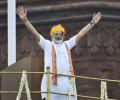
Following is the full text of Prime Minister Narendra Modi's address from the ramparts of the Red Fort on the 73rd Independence Day.

Here are some of the best photographs clicked across the globe in the month of October.

'India and Indian Americans cannot rely on wishful thinking about the checks and balances in the US system to magically take care of the many dangerous things that Trump could do,' says Chicago-based writer Ram Kelkar.

The following is the full text of US President Donald Trump's first address to a joint session of the Congress on February 28, as prepared for delivery and released by the White House press office.

PM Modi seems to be gradually ending India's strategic ambiguity

Do Modi's foreign visits actually serve India or they nothing more than expensive tools for domestic positioning and image-building, asks Shehzad Poonawalla.

'Nehru had multiple chances to make compromises, that would have preserved a united India, and he chose not to,' Nisid Hajari tells Vaihayasi Pande Daniel/Rediff.com

Imagine being a part of a country, but being discriminated against by the majority community and atrocities being committed against you by the state. This is the deplorable conditions that the Rohingyas of Myanmar live in where they are cut off from their livelihoods and sources of income, unable to access markets, hospitals and schools, and have little or no access to relief aid. In order to understand the situation and the genesis of the tragedy unfolding, Rediff.com's Archana Masih speaks to Ambassador Vijay Nambiar, the United Nations' Chef de Cabinet (Chief of Staff), who had served a long stint with the UN in New York on the issue.

'India was in no position to wage another war in 1965, having suffered a morale-shattering defeat in 1962. The three services were in the middle of a modernisation and expansion phase and therefore not fully trained or battle-ready.'
